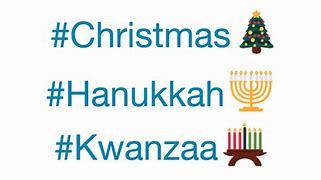
When we think of Christmas and all the lovely things that come with it, we definitely do not think about the rules for punctuation and capitalization. Just the same, the holiday season in general and Christmas in particular provide an opportunity to consider when capital letters, italics, and quotation marks should be used when referring to significant events as well as to books, songs, plays, movies, and other artistic creations.
– Capitalize major events such as the 91st Hollywood Christmas Parade and the Glow Holiday Festival. Also capitalize alternative names for Christmas such as Noel and the Nativity.
– Capitalize and italicize the names of movies, plays, musicals, and ballets: It’s a Wonderful Life, A Christmas Story, The Best Christmas Pageant Ever, Come to the Manger, Meet Me in St. Louis, The Nutcracker Suite. A song occurring within a ballet, musical, or movie is put in quotations: “Waltz of the Flowers,” “Have Yourself a Merry Little Christmas.”
-Capitalize and italicize the titles of books — A Christmas Carol, The Polar Express, The Littlest Angel; however, chapters within a book are put in quotation marks. Chapter One of Dickens’ tale about Ebeneezer Scrooge is titled “Marley’s Ghost”. The second chapter is “The First of the Three Spirits.” The titles of poems and short stories should also be enclosed by quotation marks: “On the Morning of Christ’s Nativity,” “The Night Before Christmas,” “The Gift of the Magi,” “A Christmas Tree,” “A Kidnapped Santa Claus.”
Christmas songs, including hymns, are also put in quotation marks: “Angels We Have Heard on High,” “Silent Night,” “Come All Ye Faithful,” “Rudolph the Red-Nosed Reindeer,” “Jingle Bells.”
There are two other celebrations of note that occur in December: Kwanzaa and Hanukkah. My knowledge of the former is limited, but I do know this celebration is centered on seven principles: unity, self-determination, collective work and responsibility, cooperative economics, purpose, creativity, faith. There is a specific day on which each of these principles is celebrated, and in this context, I believe a writer can justify uppercasing these principles, e.g., Day 1 — Unity, Day 2 — Self-Determination, Day 3 — Collective Work and Responsibility, etc. However, when speaking of these principles generally, they should be lowercased: Kwanzaa places a high priority on such values as unity, faith, and purpose. The symbols that accompany these principles should also be lowercased. These include a mat, candleholder, candles, and corn.
When it comes to Hanukkah, the alternate name for this celebration should also be capitalized: The Festival of Lights. In the U.S, at least, there are relatively few Hanukkah-themed movies and musicals, but those we have should be capitalized and italicized the same as Christmas-themed shows: Full-Court Miracle, The Hebrew Hammer, Eight Crazy Nights, Mistletoe and Menorahs. Similarly, Hanukkah-related songs should be put in quotations: “I Have a Little Dreidel,” “Latkes Are Sizzling in the Pan,” “Hanukkah Blessing.”
In closing, I should emphasize that when writing about Christmas, Kwanzaa, or Hanukkah, it is far more important to focus on the spiritual and historical significance of those events than on correct use of capital letters and punctuation marks. Even a hard-core grammarian should be aware of that fact.
–