In the wake of their decisive win over Indiana, the Ohio State Buckeyes will be a strong favorite to win their game against the University of Michigan next Saturday. Now, if you are like most OSU fans, you probably would criticize me for not calling Michigan “That Team Up North” or “TTUN.” Later, I’ll explain why I don’t use that nickname for Ohio State’s arch rivals, but first let’s look at why people and groups give each other nicknames in the first place.
In her essay “What Is a Nickname? An In-Depth Explanation,” blogger Hilly Martin identifies four specific purposes nicknames can serve.*
- Affection and Familiarity: Nicknames are often used to express affection and create a sense of closeness between individuals or within social groups. Throughout my growing-up years, my dad called my sister “lambie” and me “buddy.” I didn’t like that nickname, but I understand now why he used it.
- Simplification: Nicknames can be used to simplify long or complex names, making them easier to remember and pronounce. I recall taking my daughter to a dentist originally from the Philippine Islands named Dr. Jackrit Mongkollugsana. He went by Dr. Jack, making life much easier for his patients
- Personalization: Nicknames allow individuals to personalize their identity and convey a specific image or persona. They can be used to highlight certain qualities, talents, or achievements, creating a unique character for oneself. The sports world, especially baseball, provides a plethora of such nicknames. Consider Joltin’ Joe DiMaggio, Hammerin’ Hank Aaron, Charlie Hustle Pete Rose, and George Herman “Babe” Ruth, the Sultan of Swat.
- Privacy and Anonymity: Some individuals use nicknames as a way to protect their privacy or maintain anonymity, especially in online communities or gaming platforms. Some of their more-imaginative nicknames selected by Tik Tok users include Waterbaby, CantTouchThis, FlowerPower, Truthordare, GlowQueen, and RaisedbyWolves.
Groups of people often receive nicknames for the same reason individuals do. The Mongol warriors who ravaged Eastern Europe in the Middle Ages were known as “The Golden Horde,” giving them the image of both ferocity and wealth. The backbone of Napoleon’s army was “the Old Guard,” emphasizing their experience and long-standing loyalty. Monikers have been given to more-peaceful groups like the Allstate Insurance Company, “The Good Hands People”; The Salvation Army, “The Sally Ann”; and the Society of Friends, “The Quakers.” Then there are the numerous professional sports teams with self-selected nicknames like the Yankees, Dodgers, Celtics, Broncos, Patriots, and Islanders.
Of course, people are not the only ones who can receive a nickname. Nicknames can be bestowed on places, such as cities and states, too. Most people will recognize “The Windy City” as Chicago, “The Big Apple” as New York, and the “Golden Gate City” as San Francisco. “Sin City” (Las Vegas), “The Big Easy” (New Orleans), and “The City of Brotherly Love” (Philadelphia) are also well known. Some cities have more than one nickname. That’s the case with Cincinnati, which is known as “The Queen City,” “The City of Seven Hills,” and the less-flattering “Porkopolis.”
As for states, every single one has at least one nickname, which sometimes carries over to the state’s main state-supported university. Thus, we have the Indiana Hoosiers, The Ohio State Buckeyes, the Tennessee Volunteers, the North Carolina Tar Heels, the Nebraska Cornhuskers, and the Michigan Wolverines.
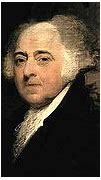
Not all nicknames are favorable, and the unfavorable ones are nearly always chosen without the approval of the recipients. Unkind nicknames abound in childhood, where kids ridicule other kids with nicknames like fatso, dork, dweeb, dummy, and freak. Nasty nicknames can carry into adulthood, where they are just as unwelcome. I can’t imagine that Founding Father and second President John Adams appreciated being called “His Rotundity” or that our eighth President liked being called “Martin Van Ruin.” Worst of all, perhaps, was the nickname thrust upon our 19th President — “Rutherfraud” B. Hayes — a consequence of the disputed result of the 1876 election.
When negative nicknames are imposed upon groups, that’s when long-range trouble can result. And that’s why I call the post-secondary school located in Ann Arbor, Michigan the University of Michigan rather than ‘That Team Up North.” While there is nothing intrinsically bad with TTUN, the avoidance of the university’s actual name is disrespectful, suggesting that this name isn’t worth remembering. This gives the Wolverines an added incentive to play harder and better when they meet the Buckeyes on the gridiron, and if they win — as they have the last three times — their win will be for them all the sweeter; our defeat, all the more painful.
So be careful, when using nicknames. Don’t use them on groups or people unless they approve. Giving someone a nasty nickname could come back to haunt you now or in the future. Plus, there’s enough nastiness in today’s world without adding to it by flinging unflattering nicknames at people. That said, let there be no doubt where my loyalties lie. Go Bucks! Beat Michigan!
*Martin actually identifies humor and playfulness as a fifth reason for giving nicknames, but I feel that reason blends in with affection and familiarity.