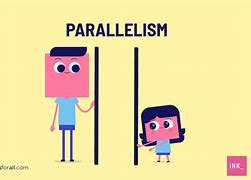
What exactly is an awkward sentence? Definitions may vary, but it’s safe to say that an awkward sentence is one that lacks balance, clarity, and/or meaning due to poor word choice, poor structure, missing transitions, or some similar deficiency in the way it is composed. In some cases, the “awkwardness” is fairly easy to correct. In this blog post, I’ll look at a common problem that results in easily correctable awkward sentences: Lack of parallel structure.
A sentence that presents any kind of list or that focuses on more than one item of a certain type should have parallel structure. Consider the following sentence:
The students received lectures on how to diagram sentences, identifying fragments, and writing compound sentences.
While it may not be that hard to determine the meaning of this sentence, some imbalance results from the lack of parallel structure in the lecture topics. The first topic is expressed as an infinitive phrase preceded by “how,” whereas the last two topics are expressed as gerund phrases, “identifying fragments” and “writing compound sentences.” The easiest way to achieve parallel structure is by changing “how to diagram sentences” to another gerund phrase — “diagramming sentences.”
Sometimes, a sentence’s lack of parallel structure can be less obvious. Consider this example:
Tom was made leader of the engineering team, and Joan managed the personnel division.
Again, the meaning of this (compound) sentence is more or less clear, but a lack of parallel structure results from the use of a passive verb in the first part of the sentence and an active verb in second part. Both verbs should be active or passive, Since the active voice is stronger, the sentence should best be corrected as follows:
Tom led the engineering team, and Joan managed the personnel division.
Sometimes parallel structure — like beauty — can be in the eye of the beholder. Does the following sentence have parallel structure?
Captain Young, Sergeant Williams, and anyone who wishes to join them should report to the front office at noon.
Some might say that parallel structure is lost here by having a compound sentence that consists of two proper nouns and an indefinite pronoun. But since a pronoun is usually an acceptable replacement for a noun — whether proper or common — a stronger argument can be made that parallel structure is not lost.
Let’s look at one more sentence that may or may not have a problem with parallel structure.
Carol served as committee chair last year, and Tim will take that same position next month.
As in the Tom-and-Joan sentence above, the types of verbs in this sentence are different, but in this case, the difference lies with tense rather than voice. “Served” is past tense and “will take” is future, but both have the same voice — active. So parallel structure is maintained.
If you are ever worried about whether your sentence has parallel structure, you might be able to sidestep the problem by making two sentences out of one. Here’s how you might revise the last two sentence examples to make parallel structure concerns moot.
Captain Young and Sergeant Williams should report to the front office at noon. That also goes for anyone who wishes to join them.
Carol served as committee chair last year. Tim will take that same position next month.
Of course, lack of parallel structure is only one thing that can result in awkward sentences. In my next blog post, I’ll focus on an error that is often harder to correct — misplaced modifiers.