Category: Writing Issues
-
Guidelines for Writing Paragraphs — Part II (Dialogue)

As every writer of fiction knows, dialogue is an essential component of a successful story. Besides adding substance to the plot, dialogue gives flesh, blood, personality, and purpose to the characters. In nonfiction, a reader more often sees single statements from individuals who offer expert insights on a topic or who have experienced something that…
-
Guidelines for Writing Paragraphs — Part I
In my last blog, I noted the problem some of my students had with writing sentences and presented a fairly simple four-step process designed to help them overcome that problem. Paragraphing — while usually less of an obstacle than writing sentences — also gave some students trouble. Some students would start a new paragraph arbitrarily,…
-
How to Write a Sentence in 4 Easy Steps

During my years teaching basic English at Columbus State Community College, I often felt bewildered by the inability of some students to write even one simple sentence. They would write fragments or run-ons, or worse, just string a series of words together that — to them — made sense but not to anyone else. As…
-
The Danger of Hyperbole
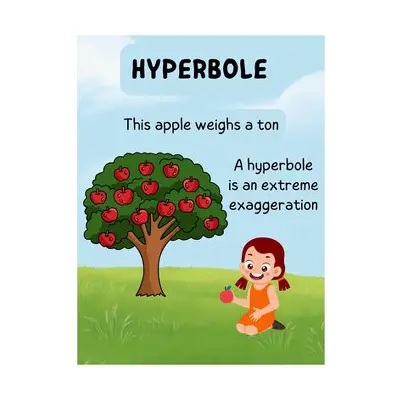
A few years ago, I wrote a blog, emphasizing how risky it was for writers to use “inflexible” words such as always, never, and certain. Such words, I argued, “anchor the writer or speaker to a fixed position from which there is no escape, no backtracking.” An inflexible word could be especially harmful if used…
-
Help! My Book Has (Maybe) Been Pirated!

In most novels, right after the title page and before the first chapter, you’ll find the following statement or something similar to it: All rights reserved. No part of this publication may be reproduced, distributed, or transmitted in any form, or by any means, now known or hereafter invented, or stored in a database without…
-
Words of Victory

It’s over. The Ohio State football team’s painful losing streak to Michigan ended at four games last Saturday with the Buckeyes posting a 27-9 victory in Ann Arbor. In celebration of that happy event, this blog will analyze the meanings of four words associated with victory, starting with victory itself followed by triumph, conquest, and…
-
When No Words Are Needed

When she was about six or seven years old, my daughter Rachel needed her tonsils removed. Her mother and I took her to Columbus Children’s Hospital (now Nationwide Children’s Hospital) for the surgery and the overnight stay that followed. Not long after Rachel had been taken to her room, I went back to our car…
-
A Second Look at Synonyms — Part II

In my last post, I focused on words that are considered synonyms even though they have slightly different meanings. Subtle but potentially important differences were noted between recall, remember, and recollect as well as between jealousy and envy. In this post, we’ll focus on three more sets of synonyms where the words don’t quite have…
-
A Second Look at Synonyms — Part I

In elementary school, we learn that synonyms are two or more words or expressions of the same language that have the same or nearly the same meaning in some or all senses. True enough, although in fact, there are very few synonyms that have exactly the same meaning. There are usually slight differences in the…
-
Summarizing My YA Novel
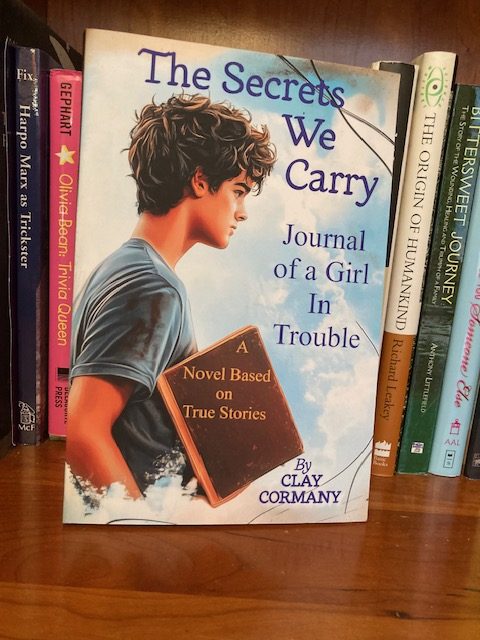
As I look over my previous blog, which focused on five guidelines to follow when summarizing a piece of writing, it occurs to me that it may be simpler to summarize another writer’s composition than your own. For one thing, you can’t avoid using the author’s words in your summary, since you are the author.…