As I look over my previous blog, which focused on five guidelines to follow when summarizing a piece of writing, it occurs to me that it may be simpler to summarize another writer’s composition than your own. For one thing, you can’t avoid using the author’s words in your summary, since you are the author. And writing an objective summary may be difficult since the values and goals that motivated you to write your composition in the first place are likely to shine through in your summary, as well.
So that leaves three “keys” that a writer should still keep in mind when summarizing his or her own piece. First, look at the opening sentences in each of your paragraphs and identify the key ideas presented there, Second, put those key ideas you’ve identified into a logical order and consider transitional words that might connect them. Third, when you’re finished, be sure your summary answers the standard journalist’s questions of who, what, where, when, why, and how.
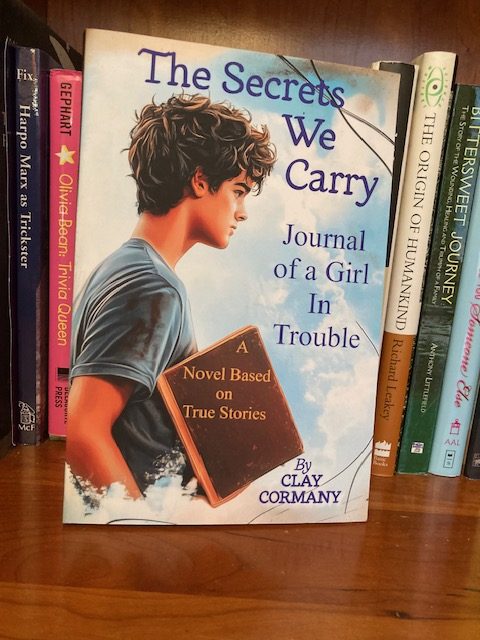
Now, as I reflect on these three guidelines, I realize they can be quite helpful when summarizing an essay, term paper, or another relatively short piece. But they aren’t of much use when summarizing a lengthy piece of writing — like a novel. And this brings me to a challenge I recently faced with my own soon-to-be-launched novel. The feature editor of a magazine that I hope will advertise the novel asked me to summarize its plot. What should I say?
After giving the task some thought, I realized the guidelines — in modified form — could still come into play as I wrote my summary. An analysis of a summary I completed for a book festival application will illustrate this fact.
It has to be a joke. That’s what high school senior Collin Morris thinks when a brown felt-covered diary falls out of his backpack along with his textbooks one evening. But after reading only half the diary, Collin realizes it is no joke. It’s the narrative of a female classmate desperately seeking to escape an abusive boyfriend who holds some grip on her because she “cheated.” But who is the “girl in trouble” who wrote the diary? How did it get into his backpack? And who is the abusive boyfriend the girl refers to only as “Red Lion?” With help from his brainy, allergy-afflicted friend Herbie Kessler, Collin sets off to answer these questions and rescue the girl. In the end, however, Collin may be the one who needs to be rescued.
Because mystery is a key element in the story, the summary raises two of the key journalist’s questions without answering them: Who is the “girl in trouble” who wrote the diary? How did it get into his backpack? The answers to two other journalist’s questions are implied by how the diary is found — falling “out of his backpack along with his textbooks.” It’s pretty clear the diary was placed into the backpack sometime during school hours at the high school itself. The question of why isn’t even addressed, since doing so would give away part of the plot. This highlights another priority that should be kept in mind when writing a summary — what is the purpose of the composition being summarized? If it is a work of nonfiction, it is unlikely any harm will be done by answering all six of the journalist’s questions succinctly but directly. But with a work of fiction whose appeal lies in keeping the reader guessing until the end, it will likely be wiser to withhold complete answers to those questions.
As far as being guided by opening sentences in putting together my summary, that just couldn’t be done with a work of nearly 70,00 words. But there were key passages within certain pivotal chapters that, with some condensing and re-wording, found their way into the summary.
It has to be a joke. (Chapter 1: It all made sense now. The diary had to be a joke.)
But after reading only half the diary, Collin realizes it is no joke. (Chapter 2: “How much of it have you read?” “Not quite half, but that’s enough to know she’s not kidding when she calls herself a ‘girl in trouble.’”)
With help from his brainy, allergy-afflicted friend Herbie Kessler, Collin sets off to…rescue the girl. (Chapter 2: He considered the two of them a team whose combined talents could solve this mystery, and rescue this girl…)
Collin may be the one who needs to be rescued. (Chapter 45: “So the damsel in distress rescued the knight in shining armor.”)
As I finish this blog, I realize that there are some advantages to summarizing your own composition no matter how long it is, For one thing, you know what the purpose is right from the start. More than that, you understand the ideas and arguments that support your purpose as well as the language you have used to convey that purpose to others.
So, just how good is the summary of my YA novel, The Secrets We Carry: Journal of a Girl in Trouble? The weeks ahead will answer that question as I use that summary or one like it to gain access to book festivals and bookstore signings.